Why keep trying when nothing changes? The power of consistency
FAITH:
So there's a special kind of frustration that I want to sit with today and it's the one where you are watching someone you love stay stuck. Stuck in a relationship that they keep complaining about, stuck in a job, the same problem that they told you umpteen times, you know, that kind of thing.
MELODY:
Yeah.
FAITH:
I mean you can relate, right? Maybe some of that, some of that underneath that is care.
MELODY:
It has to have care otherwise you wouldn't care.
FAITH:
But also, and I'm gonna be honest here, a tiny bit of judgement, right? Because the thought goes through our heads, why don't they just do something about it? Why can't they just fix this? Because it's actually a very simple fix because from our point of view, where we are sitting, we think it's so simple, why can't they just do it, right? And I've been there. I have felt watched and I have also done the watching. So I've seen it from both sides.
So what I want to unpack today is a few things that have helped me shift in that frustration. These are things that I wish someone had said to me or done to me when I was on the receiving end and things that I hope I can do now, I hope I'm doing now.
MELODY:
Tell me, tell me.
FAITH:
Okay, so I will tell you, but first this is Life in the Grey, a Mums At The Table podcast where we sit in the middle of relationships and growth. I'm Faith and my background is in applied psychology and I'm currently training in psychotherapy. Parts work is where I jam and it's also where I gravitate towards my own healing.
MELODY:
And I'm Melody, a mum, a writer, a communicator and project leader for Mums At The Table who brought you this podcast. So my particular interest lies in learning from Faith's learning and discovering how it could apply to parenting and my relationship with my son.
FAITH:
You say that like Faith's learning and it's like, okay, I hope I have learned things and there's so much pressure. Okay, so going back to what I talked about today, right, this frustration that we feel, maybe even a little bit of judgement, whatever it is, with regards to watching people look like they are stuck in space and time.
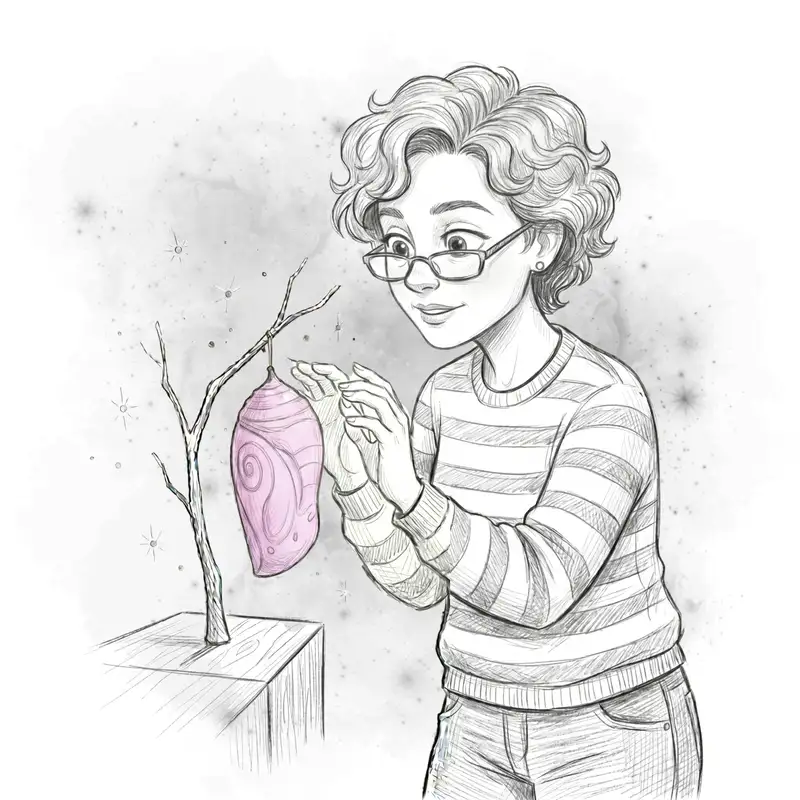
One thing that helped me is when I learned, knowing that something needs to change here and being able to act on it, there is a real distance between them. And we now know sometimes it can take up to years. Sometimes that deliberation stage, I like to call it the incubation stage because I think incubation sounds like, you know, we're just like waiting to grow out from caterpillar to butterfly. Yeah, it can take up to years. It can.
MELODY:
And which I can imagine that being very frustrating for someone to say, just do it, just do it for years and not . . . that person not doing it.
FAITH:
Even if they don't tell you to just do it, they're just sitting there and trying to hold space and listen and be present for you and validate. And then it's like, oh, I'm doing all this validation, it doesn't seem to be going anywhere, right? Because that's the thing, right, from the outside and also honestly sometimes from the inside.
Well, we all know change needs to happen, we just don't know what needs to change sometimes. That deliberation can look like a lot of things. It can look like patience but it can also look like freeze.
And oftentimes it's hard to tell which is which in the moment and having been someone who has sat in deliberation for a very long time, even the person themselves sometimes can't tell which is which in the moment.
MELODY:
Yeah, I guess it makes sense because, you know, deliberation or incubation indicates that something is happening but from the outside looking in or even from the inside looking in, it looks like it's doing nothing.
So, okay, there's a lot of theory here. You said that it's happened to you. Tell me your story.
FAITH:
Well, I struggled for a very long time trying to find out whether or not I was moving forward, moving backwards. The thing is that sometimes the struggle comes when you really are trying but you can't see the results yet and so I'm just thinking, am I stuck because I'm not doing enough or am I stuck because it's just I need resources or is it not that I'm stuck but I'm just incubating, I'm still trying things out because it's new, it's different and so it looks stuck but it's not. I have no idea.
MELODY:
And you know what, I'm just thinking from a judgement point of view, right, it's not that from if I'm being very judgey, right, it will be like oh, you're not doing anything about it.
FAITH:
Yes and the thing is you don't even have to be very judgey, you can just be a little judgey and that thought can already appear.
MELODY:
I will measure my judginess.
FAITH:
And here's the thing, I realised and I learned, I learned that which is it is the wrong question because what helps a person who is in the process of taking action and what helps the person who's still incubating is the same thing.
MELODY:
And?
FAITH:
Keeping the cost low.
MELODY:
Keeping the what?
FAITH:
Keeping the cost low. Okay. Safety, resources, how to get, how to make access to safety and resources as easy as possible, how to make the next move that they are supposed to take or they want to take cost as little as possible.
MELODY:
What do you mean by safety? Because you know, they are safe, right? It's not like as if they have a gun pointed to their head.
FAITH:
Well, yes, there is that life-or-death situation safe but safety is also what we feel when we enter into spaces and when we move and navigate through life, like do I feel safe to speak up, do I feel safe to try, do I feel safe to fail, do I feel that if I say something or if I'm being funny, is it going to be taken as you know humorous or stupid? If I make a mistake, is it going to ruin the rest of my life? Are people going to look at me and say, you are useless and you can't do anything? That kind of safety. Does it make sense?
MELODY:
Emotional safety, mental safety.
FAITH:
Psychological safety, exactly. And a lot of times, the stuckness can be because we don't feel safe and safety can only happen when there is access to external resources and by external resources, I mean not just whether someone can offer you a new job or someone can give you money but whether someone can make you feel like, hey, who you are is accepted. You know what, who you are should be celebrated. I'm going to celebrate you. I believe that you can do this. Maybe you can't find what you need right now and maybe it's hard for you to grasp it but I so truly believe that it will happen for you.
MELODY:
So you mean the lack of judginess?
FAITH:
I guess you can put it that way. Because you know, it means that we don't need to judge someone whether they are moving or not moving. We just need to offer them access to these resources and make their next move cost a little less. Try to help them make it. We may not be the ones that directly do it but there are indirect ways like validation, like sitting and listening to them as they process it, asking questions, getting curious.
So rather than trying to go straight into how can I fix it, it's believing that they kind of deep down inside actually kind of know what they need. They just can't access it yet because it's covered under this feeling of survival and unsafeness.
MELODY:
Yeah, I think that kind of makes sense because like I'm just trying to relate it to parenting right and because you know they don't quite yet have an inner child because they are the child. What I'm trying to say is that you know it kind of makes me think about how you know my words of advice don't seem to be landing with my son right.
Just thinking so when he was younger he had a he he had a very like glass-half-empty kind of attitude. Well from my point of view anyway from my point of view I'm going he's always tending towards catastrophising, constant negative what-if scenarios and I remember going I remember feeling this constant sense of frustration right—judginess—because you know I will go through the exercises with him going through all the different things that he can you know, to turn that frown upside down so to speak and it really didn't seem to work. It really just felt like we were stuck. But lately and we're talking you know five or so years I have noticed a shift in him.
Yes, potentially it is because he's getting older but I think there is a shift because I know his attitude and his outlook is actually different now to the point where he sometimes even helps me to see the silver lining in situations.
FAITH:
That is really empowering.
MELODY:
So I'm assuming that there is that incubation period but the other thing that I want to say because it's you know you're talking about resources and and safetiness and yes there is safetiness but I don't know resources but anyway the other thing that I want to talk about is this piano learning right so he's been learning the piano for about three years and every time he learns a new piece, big emotions, it's too hard, it's horrible, I want to quit piano, I hate it, I'm not good at piano . . . it's terrible. But now he actually works through it all by himself so he goes through all of that he goes through the phases but he works through it. It took two years or so but it started from me having to actually sit with him, work through his emotions with him, cajole him, sometimes bribing, sometimes forcing but now I guess it's yeah it's giving him that resources and now he works through it.
It's a process that took two years. It's probably still ongoing but I guess what I'm trying to make is that you know what you're saying about this incubation period, this deliberation period, it is a very, very long time. We're talking years here and for me at least when I'm actually going through it with my son it feels like I'm talking to a brick wall. It just feels like it doesn't land and now with what you're saying and with the benefit of hindsight right it's like well I guess he wasn't stuck, he was moving, he was processing, whatever just on a very much slower timeline than I would have liked.
Yeah but I guess the thing I'm wondering as well right is that when you're in it how do you even know what you're saying? Like when the person that you're talking to is in it, how do you know that what you're saying is actually having an impact? Like is there even a point of persisting? With my son obviously I'm not going to give up right? But with someone else how do you even know that what you're doing is having an impact?
FAITH:
Well you hit the nail on the head right because you're a parent so you always have to persist because you're a parent of a young child. The incubation period can take a very long time. It can also be very short. It really depends on a lot of situations.
MELODY:
See the point is when it's short right it's not frustrating.
FAITH:
Yeah yes when it's short it's not frustrating yes because you get to see the results faster because it soothes you, it comforts you and of course for the person who's going through it it is a big relief because they don't have to struggle through it so long right yeah.
And to the question of whether it is working because it's true, that sometimes when things take a long time there's a lot of doubt that comes out to say is this even working? Is what I'm doing even does it even matter? It's like I'm sitting here and I'm sincerely truly validating as in like I'm really trying to be present and address and understand and see the feeling that is underneath rather than just addressing the outcome that the feeling is pushing out and I'm doing that and I'm really holding back on the jumping in to fix it and give you all the answers first because that can happen at the right time.
You see the stages right it's like you validate first when the person truly feels seen when the emotions have run through the cycle then when they're ready you can tell. You can tell when someone's ready to be like okay so you want to kind of figure out together what could be done and then they're ready right otherwise it's like you're just throwing like water against a brick wall or something and nothing's happening. I'm not sure that metaphor works but you get what I'm saying.
I tell you the temptation is like we go into like, give me a five-step list right, and then I’ll know. There is no five-step list because the only way to know whether something is working is data collection over a real period of time, not just one moment, because any single moment can go either way. You look at a meltdown today, a meltdown today, it could mean regression, it could mean breakthrough. A quiet moment that they're going through could mean they're in a process of integration, it could also mean they've totally shut down.
It's hard to tell from just one moment but over a real phase of time you can note differences and I think that's what happened in your life right? That's what I believe in, that's what I have experienced through my life that at one moment if I would just pick out that one moment I couldn't have told myself yes this is what's going to happen. I can tell myself now, why? Because I have the benefit of hindsight. I know what happens next, I know what happens after the next and after the next and see it's a period of time, there's many different data collection points.
We look at a whole data collection over a period of time and then we ask ourselves a very simple question, what's the difference? Not what has improved, not what has gotten worse but just what's the difference? You notice how I like to stay neutral, what's the difference?
I find that when I stay neutral it's so much better, so much easier for me to access compassion for myself when I stay neutral and for others. What's the difference? Are the questions that they're asking different? Is the way that they are responding to challenges different? Are there differences in the time that they need to come back to regulation? What's the difference?
And then that will kind of tell you whether or not something is working, not working and I am not saying do this once every two years but it's good to do a check-in, you know, like maybe every three months, every six months. I don't know, see, I'm hesitant. I don't want to give people a timeline, a time frame again, right?
Yeah, I'm just saying the principle behind it is, don't look at something at one point in time and then think this is it.
MELODY:
Everything that you say is like, you know, looking at them, how they have difference but, you know, you don't actually just have to look at them, you can look at yourself as well. So if you feel like you're stuck, it's the same. The same principle applies, just replace the word they with me or is it different for me? Is it different?
But, you know, yes, I know as much as you don't want to give number of points, I will. Because I think there are just three things that we can try to remember, especially if we are parents, right, and we don't have the choice and we want to, I say don't have a choice but I mean it facetiously, like, you know, we want to stick with our people, we want to stick with our children and we want to stick with people who matter to us.
And so the three things that I think we can try to remember, right, is to be tenacious, be patient and to trust, just to remember that their timeline is often not yours and that you're doing better than you think.
FAITH:
Mel, did you notice the consistency that you were providing to your son? Because the consistency of showing up more often than not through the piano lessons, through the catastrophising. Your son is learning to handle life from your presence.
Years of you being there with his big feelings is how he learns his way through them and eventually he's not gonna need you in the room so much anymore. I don't know how this feels but he may not need you in a room, well he shouldn't need you in a room so much anymore because you've been in the room with him so many times that it's enough for him to internalise it. And maybe that's number four, that steady showing up itself is what moves the movement, whether we can see it or not.
MELODY:
So mums, if you're listening to this, you're doing better than you think, well even not mums, anybody who's listening to this, if you're listening to this and you're trying, you're doing better than you think. And with that, thank you for listening to Life in the Grey, a Mums At The Table podcast where we try to figure out not what's right or what's wrong but what works best for us through a lens of compassion. Like, subscribe or drop us a thought, comment or question at hello@MumsAtTheTable.com and we will catch you next month.
Creators and Guests